More native grasses than predicted!
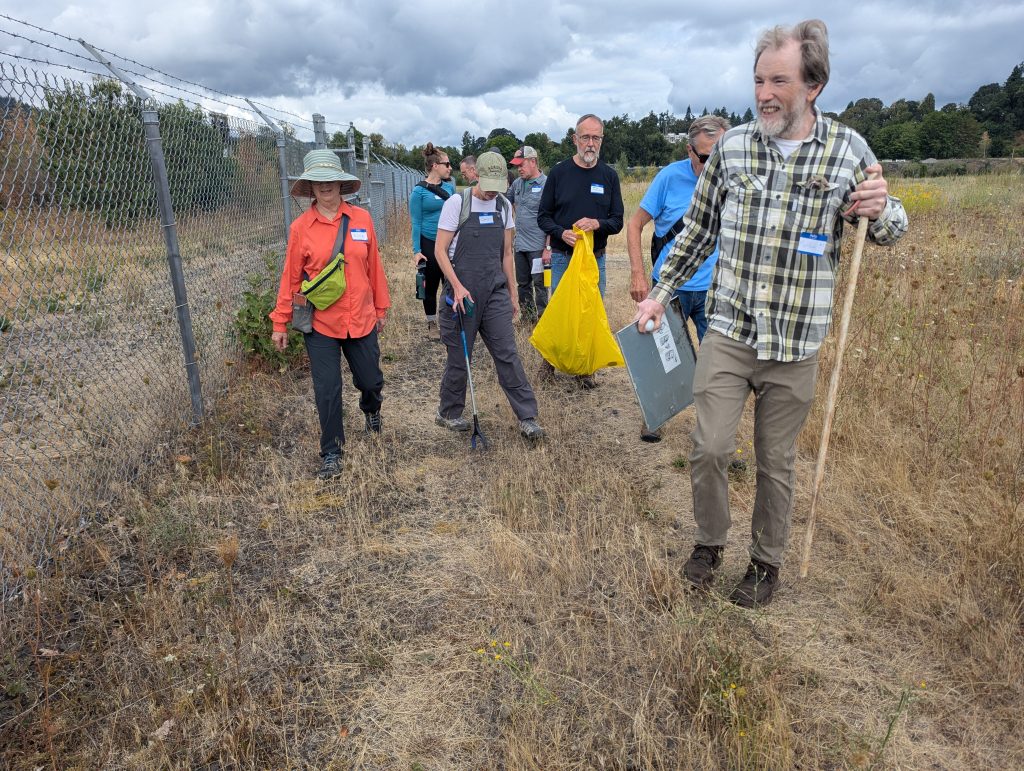
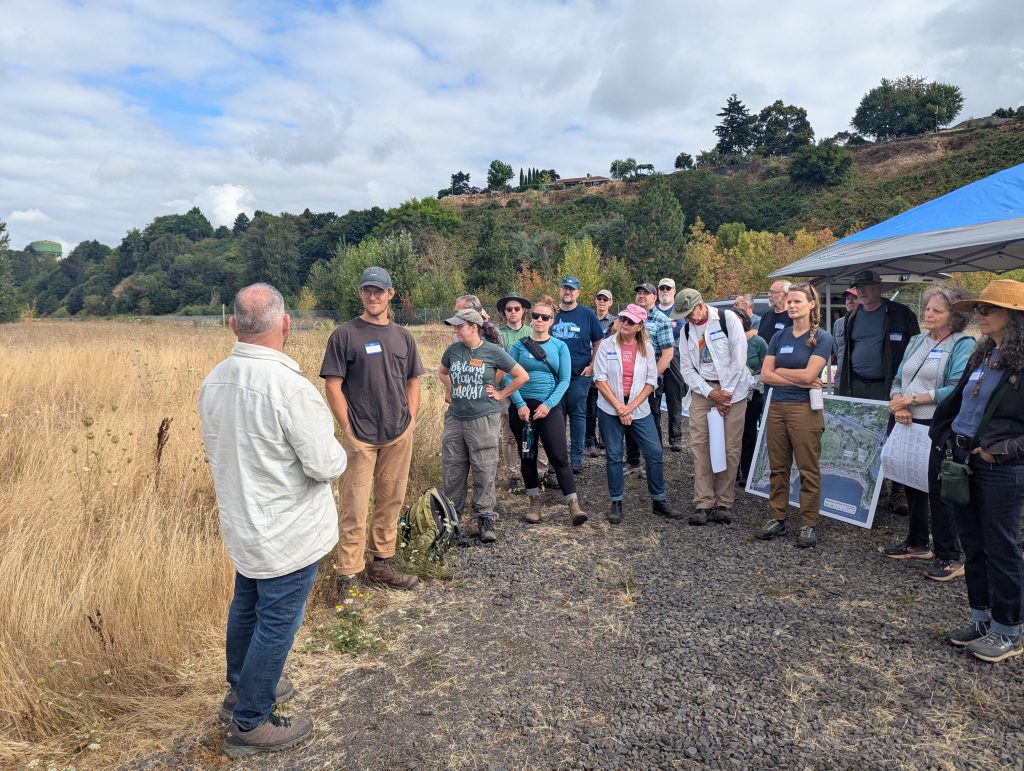
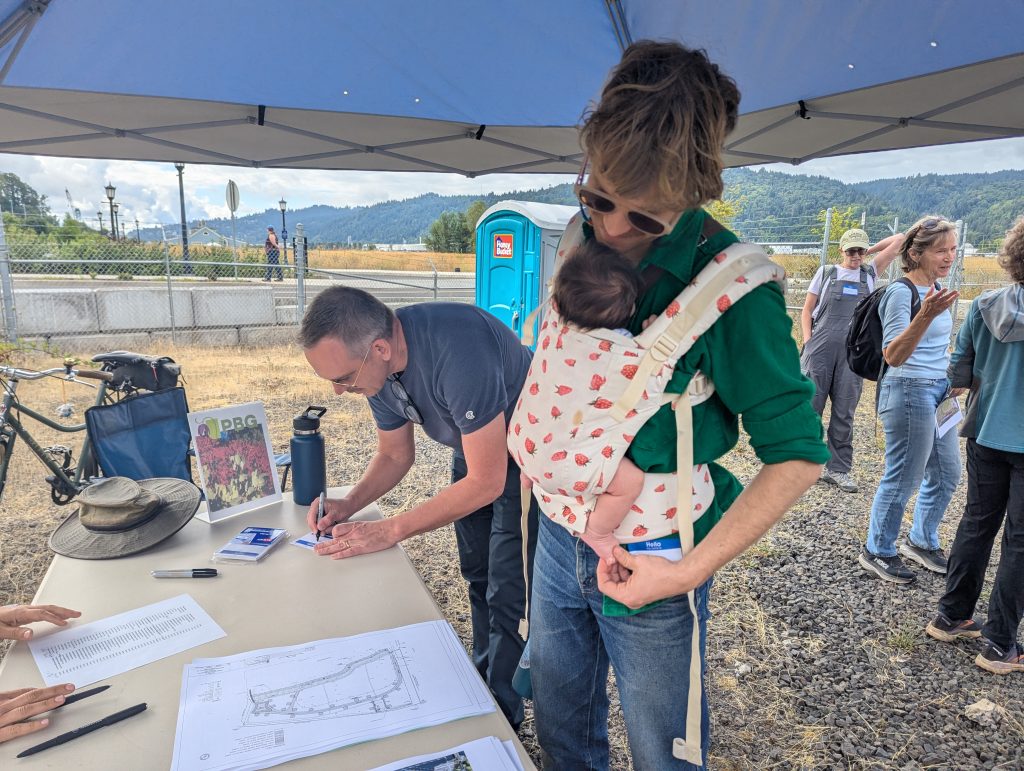
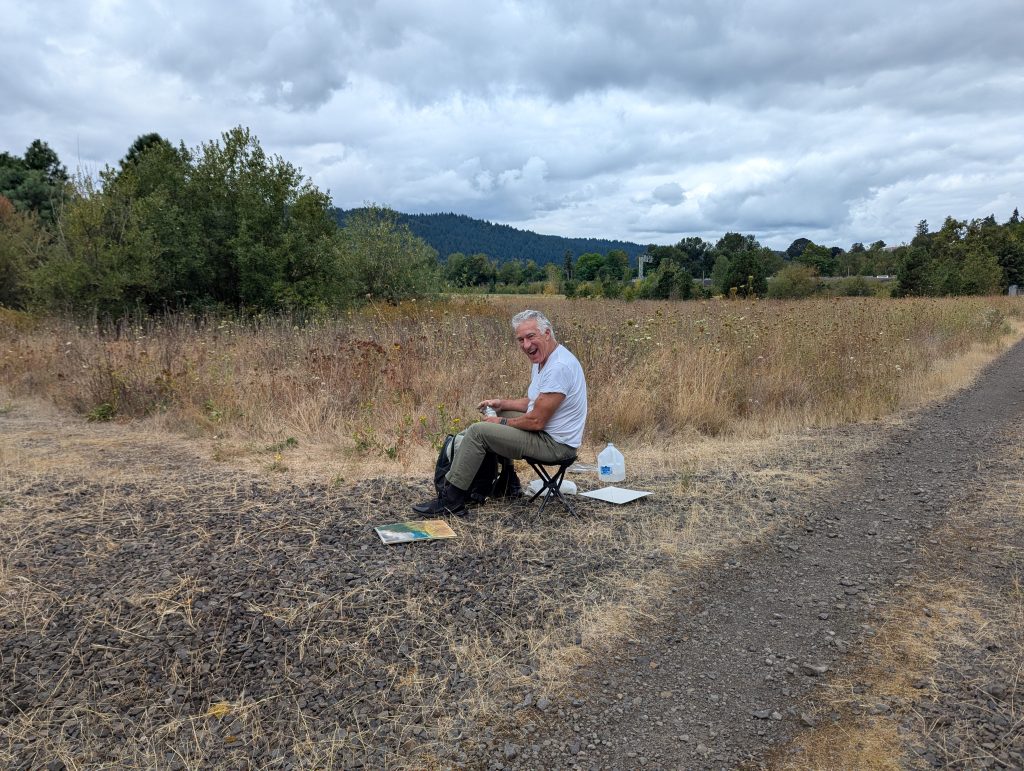
Thank you to everyone who participated in our first ‘Volunteer Tour & Botany Survey,’ held 10am to noon on Saturday, August 16, 2025. Volunteers also picked up trash from around the site — much appreciated.
Over forty adults (and a baby!) fanned out in three groups to tour and explore the site. Each were given a general botanical map and the list of plantings from the 2005-2006 superfund cleanup (see excerpt below).
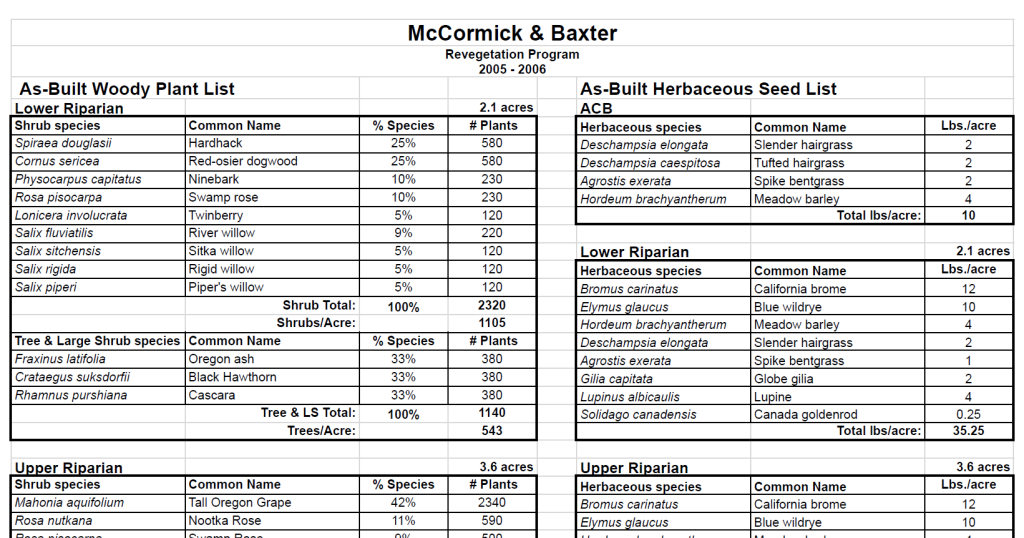
Notable observations include:
- Much of the grasses observed are native and likely grew and reseeded from the restoration planting in 2005-2006 which immediately followed the Superfund cleanup.
- Also observed were naturally seeded patches of or ‘Purple Love Grass,’ an ornamental bunchgrass broadly endemic to North America and a lover of sandy soils.
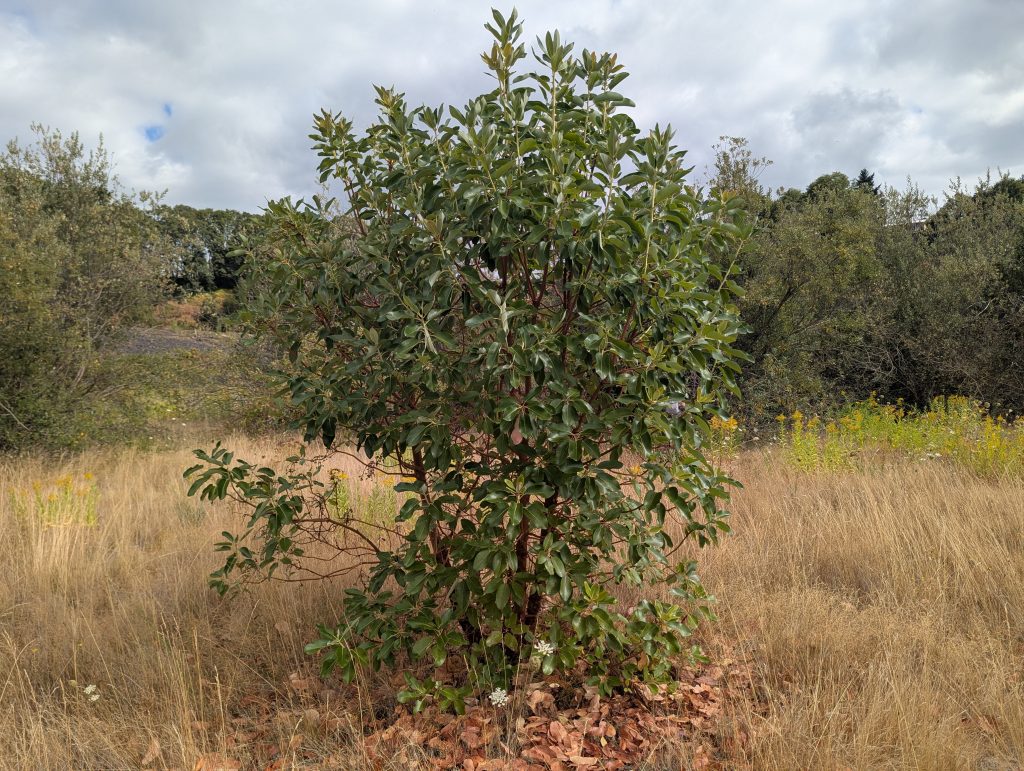
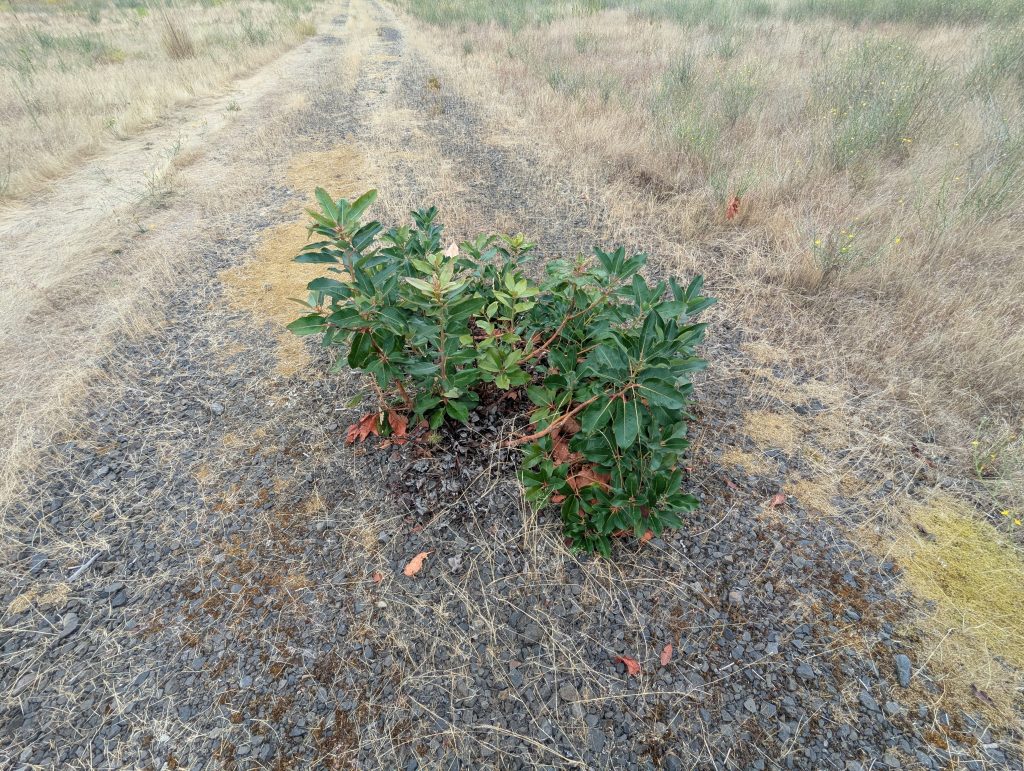
- Healthy groves of madrone, ponderosa, oak, willow and mahonia anchor the quarter-mile long bioswale.
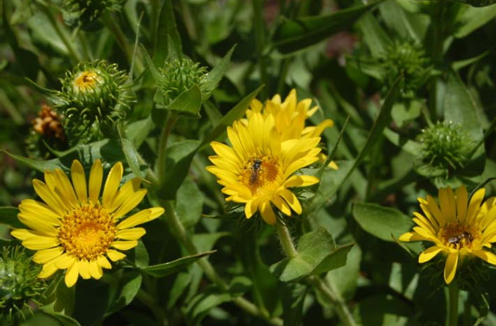
- Willamette Valley Gumweed (pictured below) was still blooming, and for many it was the first time they ‘pinched’ the flower head and realized why it is called ‘gumweed’ (sticky!).
- Madrone, Ocean Spray, Hawthorne, and poison Oak were often found growing out from the fence.
We will be offering additional tours this Fall, and conducting botanical surveys on a regular basis. Stay tuned for announcements for those opportunities.
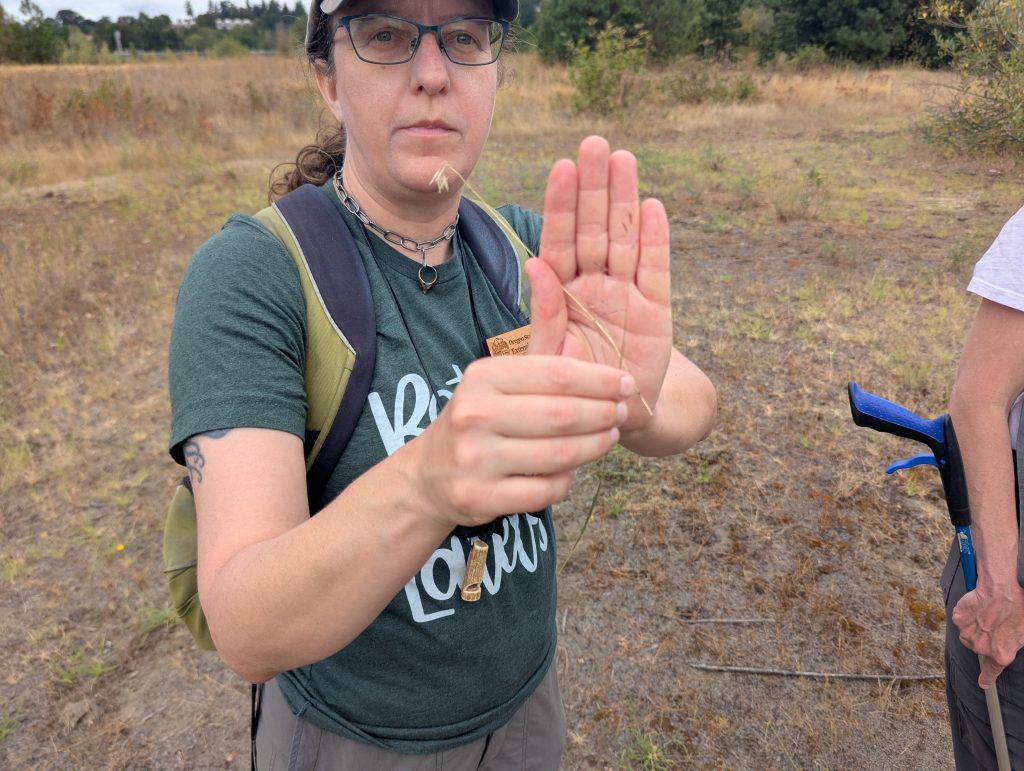
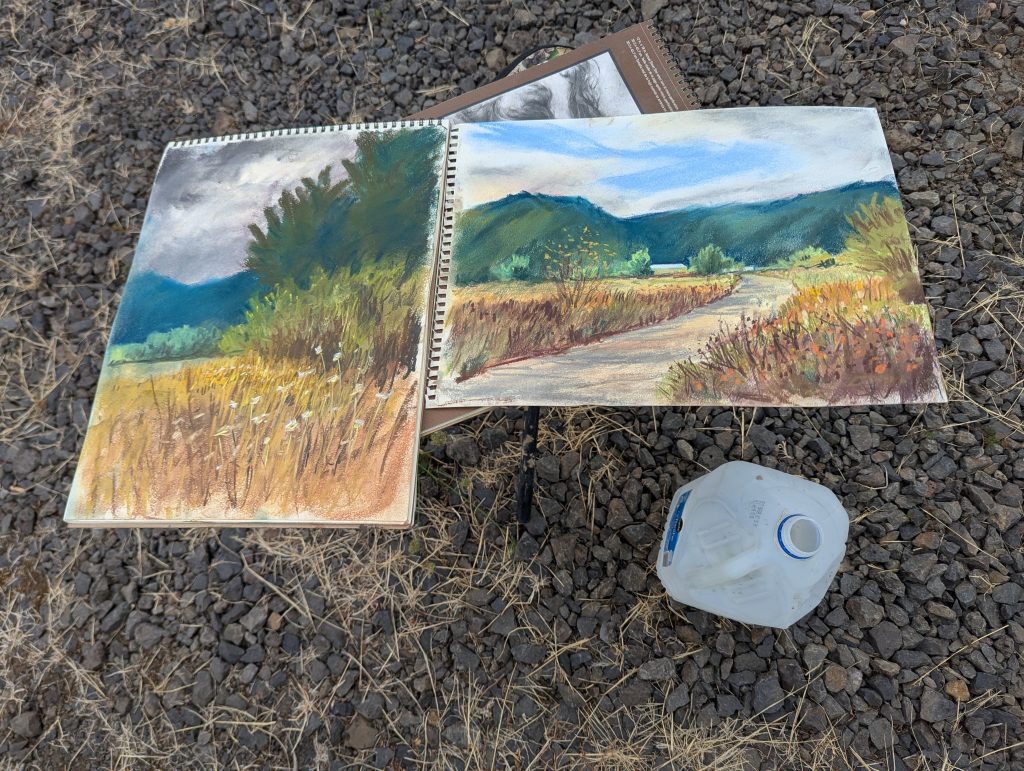
Other images from the Tour & Survey