
LND LAB, led by award-winning landscape architect Michael Geffel, is partnering with PBG to create a research structure so that students, researchers, and community members interested in studying M&B can access historical records, site plans, monitoring reports, and operational infrastructure.

LND LAB evolved out of ‘Fuller Initiative Land Lab’ and which earned the 2024 Design Futurist Award from Pacific Horticulture.
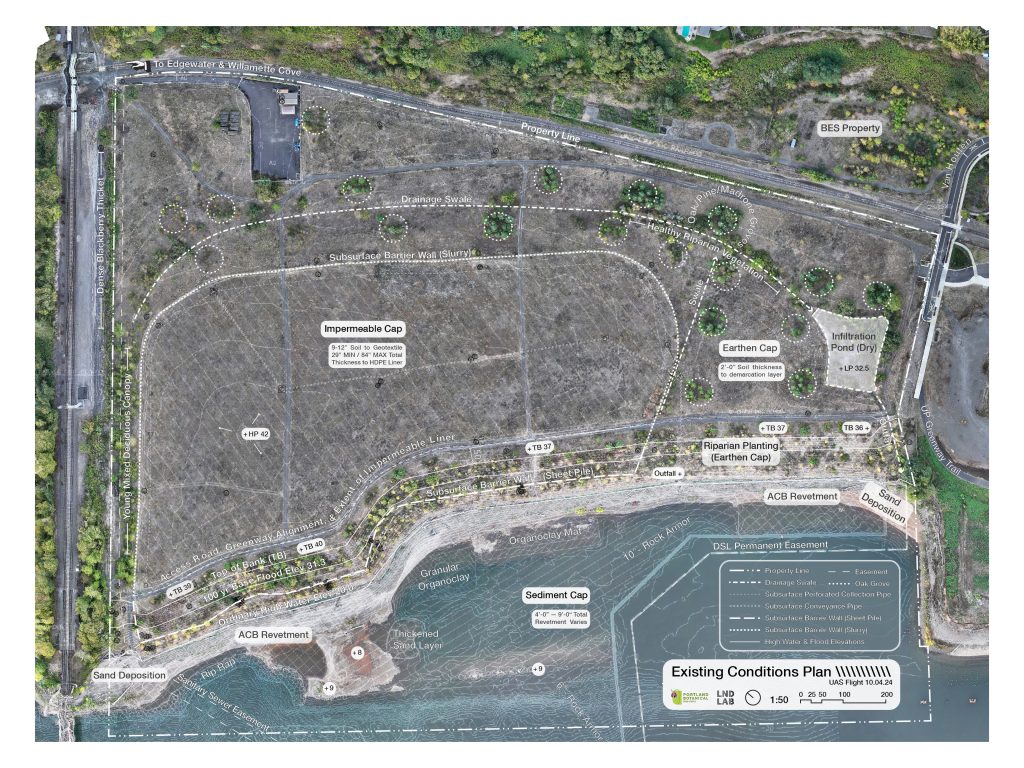
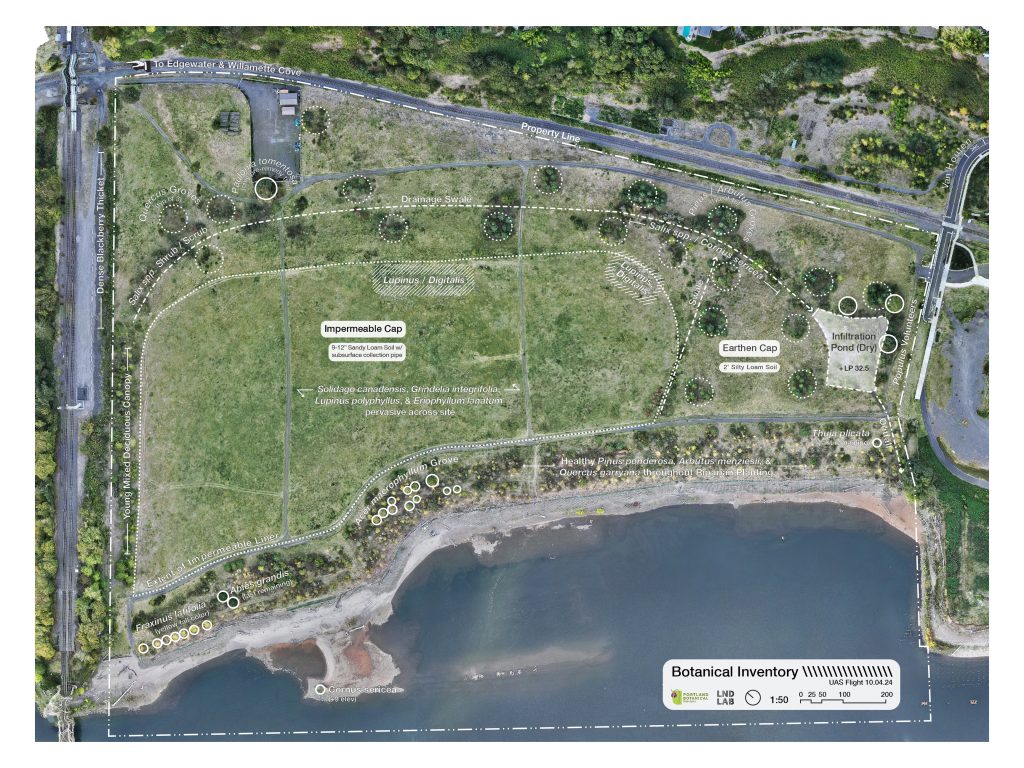
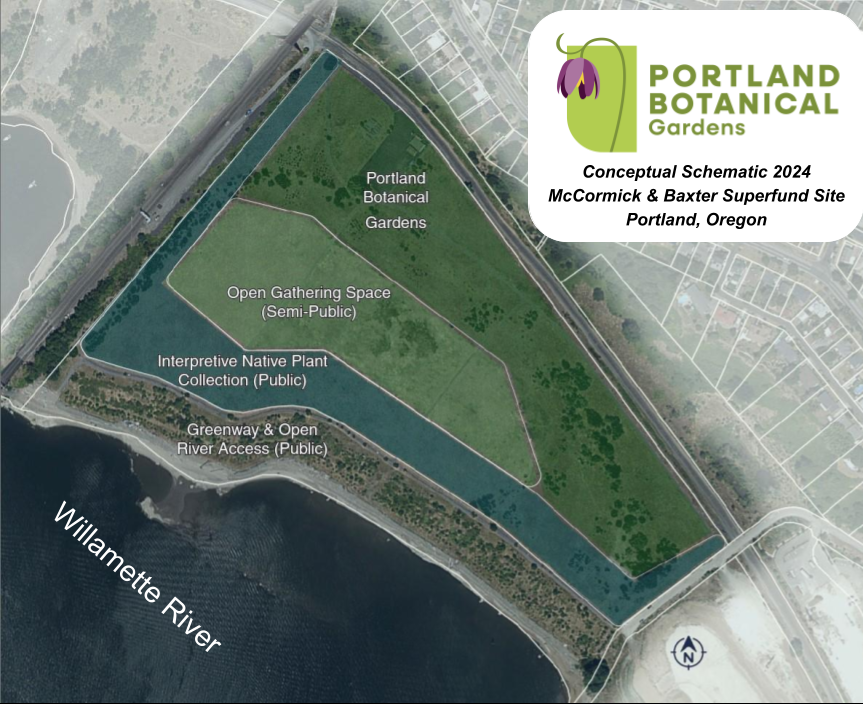
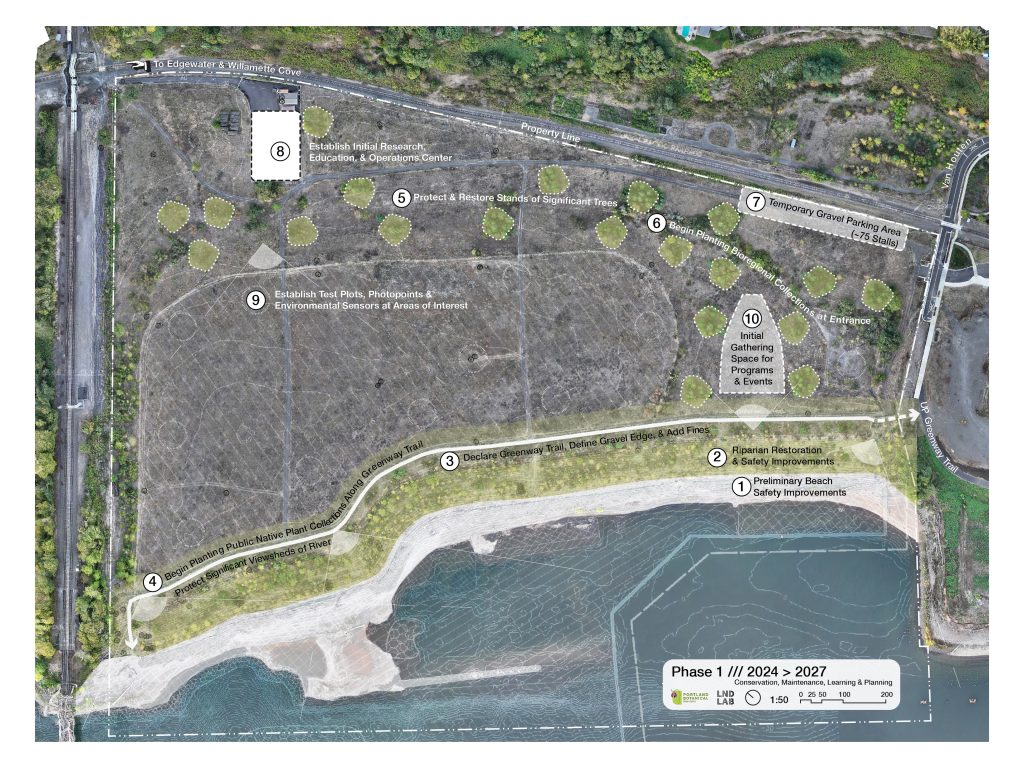
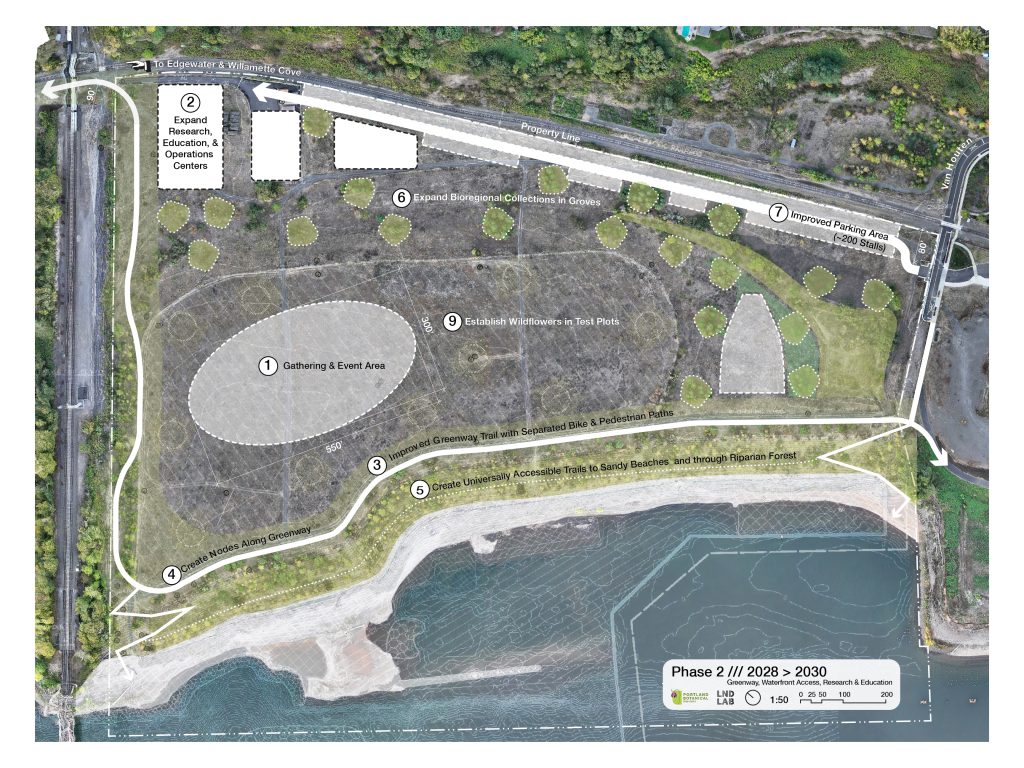
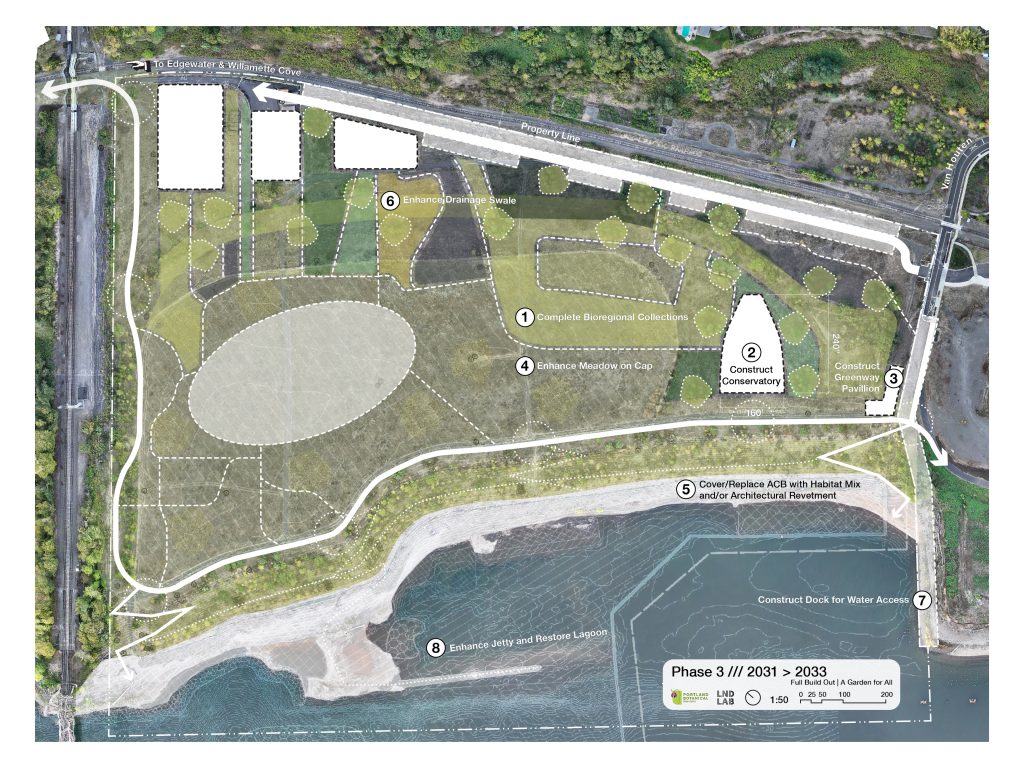
As a start, LND LAB generated detailed Existing Conditions and Botanical Inventory site maps, and it converted early conceptual plans showing potential garden and public waterfront development over three phases. Michael is also currently serving as a liaison to three University of Oregon Graduate students who are focusing their independent master’s projects on the development of a botanical garden and public greenway at M&B. Read more on the LND LAB Instagram page.
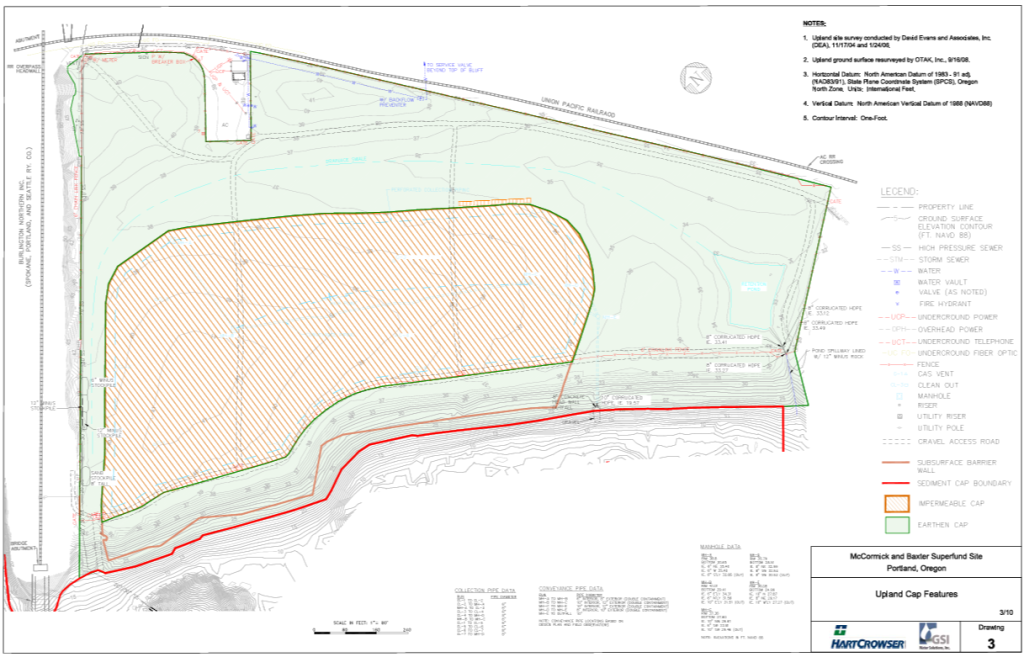
Because of the engineered draining system throughout the site and setbacks for the river, building areas are limited. See the Department of Environmental Quality (DEQ) record drawing below highlighting the impermeable cap – an area currently covered in grasses and forbs and not conducive to heavy infrastructure.
LND LAB’s renderings (gallery below) highlight the many constraints and opportunities with the existing conditions, providing key insights for PBG to complete its due diligence and feasability research. They also help identify best areas for the Greenway alignment, public access to the river, paths & parking areas, and garden infrastructure. PBG’s proposed development adheres to those constraints, protects access to the restored waterfront, and puts the Greenway close to the river. LND LAB’s conceptual diagrams of the phases showcase these possibilities while keeping it abstract enough to easily integrate future public and professional input.
LND LAB and PBG are creating baselines for future research and design, and templates for a phased and inclusive design approach. Thank you Michael and LND LAB!